
Handwriting Without Tears is a renowned program designed to simplify handwriting instruction. It focuses on making lowercase letter formation easy and engaging through a multisensory approach, ensuring children learn effectively with minimal frustration. The program’s structured method and accessible resources, such as PDF guides, make it a popular choice for educators and parents alike.
Overview of the Handwriting Without Tears Program
The Handwriting Without Tears program is a highly structured, research-based approach designed to make handwriting easy and enjoyable for children. It focuses on teaching lowercase letter formation through simple, consistent methods and multisensory activities. The program uses a unique two-line paper format, reducing complexity for young learners. It begins with uppercase letters, followed by lowercase letters, ensuring a logical progression. Resources like PDF guides and workbooks provide clear instructions, diagrams, and practice exercises. The program emphasizes proper spacing, starting points, and strokes, making it accessible for children to master handwriting skills. Its developmental approach and engaging activities ensure a strong foundation for lifelong writing proficiency.
Importance of Lowercase Letter Formation
Lowercase letter formation is a critical skill in handwriting development, as it forms the foundation for reading and writing proficiency. In the Handwriting Without Tears program, mastering lowercase letters is emphasized after uppercase letters, ensuring a logical progression. Proper formation helps children recognize letters in text, improving reading fluency. It also enhances writing speed and legibility, essential for academic success. The program’s structured approach, supported by PDF resources, ensures consistency and clarity in teaching. By focusing on correct starting points and strokes, students build muscle memory, reducing errors and fostering confidence. This skill is vital for overall literacy development, making it a cornerstone of the Handwriting Without Tears methodology.
Benefits of Using the HWT Approach
The Handwriting Without Tears (HWT) approach offers numerous benefits for teaching lowercase letter formation. Its structured, multisensory method engages students through visual, tactile, and kinesthetic activities, making learning enjoyable and effective. The program’s emphasis on grouping letters by similar strokes reduces confusion and accelerates mastery. Additionally, HWT provides clear, child-friendly PDF resources, such as formation charts and practice sheets, which guide consistent practice. The use of two-line paper simplifies letter placement, aiding students who struggle with traditional three-line layouts. By focusing on proper technique and progression, HWT fosters legibility, speed, and confidence in handwriting, laying a strong foundation for academic success. Its adaptability makes it an ideal choice for both classroom and home use.

Understanding the HWT Lowercase Letter Formation
The Handwriting Without Tears program focuses on teaching lowercase letter formation through a developmental approach. It begins with capitals, then transitions to lowercase, using multisensory activities for engagement and mastery. The method emphasizes proper strokes, starting points, and spacing, ensuring a strong foundation in handwriting skills. By grouping letters with similar formations, HWT simplifies the learning process, making it accessible and effective for students of all skill levels.
Letter Formation Order in HWT
The Handwriting Without Tears program teaches lowercase letter formation in a specific developmental order. This approach groups letters with similar strokes or starting points, making learning easier for students. For example, letters like c, a, and d are introduced together due to their shared curves. The program begins with uppercase letters, as they are simpler, before transitioning to lowercase. This method ensures a logical progression, helping students build skills step-by-step; The HWT workbook and PDF resources provide clear diagrams and instructions, guiding proper letter formation. By following this structured order, students master lowercase letters effectively, reducing confusion and fostering confidence in handwriting.
Key Principles of HWT Letter Formation
The Handwriting Without Tears program emphasizes simplicity and consistency in teaching lowercase letter formation. It focuses on clear starting points, correct strokes, and proper letter sizing. The program uses a unique two-line paper design to help students maintain proportion and spacing. HWT also incorporates multisensory activities, such as tracing letters with fingers or using manipulatives, to engage different learning styles. Instructions are straightforward, avoiding complex terminology. The program teaches uppercase letters first, followed by lowercase, to build foundational skills. This structured approach ensures students develop accurate and confident handwriting. The PDF resources provide visual guides and practice exercises, reinforcing these principles effectively. By following these guidelines, students master letter formation with ease and consistency.
Role of Multisensory Activities in HWT
Multisensory activities are a cornerstone of the Handwriting Without Tears program, engaging students through sight, sound, and touch. These activities help learners connect letter formation with physical sensations, enhancing memory retention. Students trace letters in sand, use manipulatives, or form letters with their fingers, making learning interactive. Songs and rhymes further reinforce letter shapes and sequences. This approach caters to diverse learning styles, ensuring all students can grasp lowercase letter formation. The multisensory method builds fine motor skills and hand-eye coordination, laying a strong foundation for handwriting success. HWT resources, including PDF guides, provide structured exercises to complement these activities, ensuring consistent and effective practice.

Lowercase Letter Formation Techniques
Handwriting Without Tears emphasizes correct starting points, strokes, and spacing for each lowercase letter. Techniques focus on simplicity and consistency, helping children master letter formation effortlessly with guided practice.
Starting Points and Strokes for Each Letter
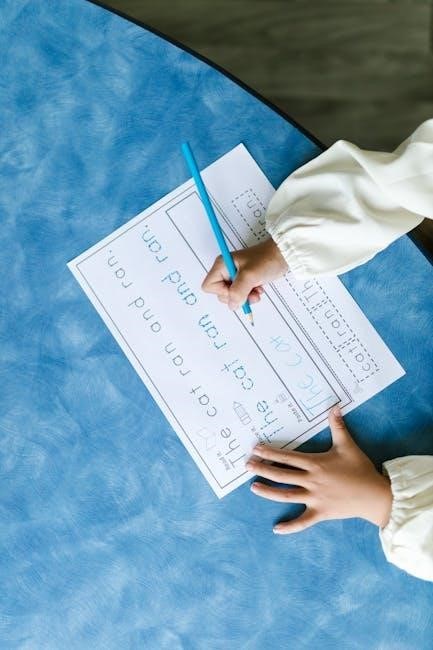
Handwriting Without Tears provides clear guidelines for starting points and strokes for each lowercase letter. For example, letters like ‘a’ and ‘c’ begin at the top, curving around to form their shapes, while ‘d’ starts with a straight line before looping. Each letter follows a specific sequence, ensuring consistency and legibility. The program emphasizes simple, descriptive language to guide students, such as “start at the top, curve down” for ‘b’ or “make a bump and go around” for ‘m’. These techniques are reinforced through multisensory activities and visual aids, helping students internalize the correct formation. The PDF resources include diagrams and practice sheets, making it easier for students to master each letter’s unique starting point and stroke pattern. Proper spacing is also highlighted to maintain readability.
Proper Spacing Between Letters
Handwriting Without Tears places a strong emphasis on proper spacing between letters to enhance readability. The program teaches students to leave a consistent space, equivalent to the width of a letter, between words and slightly less between letters within a word. This skill is introduced early and reinforced through practice sheets and activities. The use of two-line paper helps students visually gauge appropriate spacing. The PDF resources include guides and exercises that focus on spacing, ensuring students develop this habit naturally. By mastering spacing, students produce handwriting that is neat, organized, and easy to read, which is a key goal of the Handwriting Without Tears methodology.
Common Challenges in Letter Formation
Common challenges in lowercase letter formation often arise from letter confusion, spacing issues, and fine motor difficulties. Letters like b and d are frequently mixed up due to their similar shapes, while others, such as p and q, can be tricky because of their directional differences. Proper spacing between letters is another hurdle, as some students may write too closely or unevenly. The Handwriting Without Tears program addresses these challenges by using clear visual guides and consistent stroke sequences. Multisensory activities, such as tracing letters with fingers or using manipulatives, help reinforce correct formation. The PDF resources and practice sheets provide targeted exercises to overcome these difficulties, ensuring students master each letter with confidence and accuracy;

Teaching Lowercase Letters in Groups
Handwriting Without Tears groups lowercase letters by similar formation, simplifying the learning process. Letters like c and a are taught together, as they share starting curves, making patterns easier to recognize and replicate.
Grouping Letters by Similar Formation
The Handwriting Without Tears program organizes lowercase letters into groups based on shared formation patterns. This approach simplifies learning by allowing students to master a few strokes or curves before moving on to new ones. For example, letters like c, a, and d are grouped together because they start with the same foundational curve. Similarly, letters such as g and q share a similar tail formation. By focusing on these groupings, students can build consistency and confidence in their writing. The program also provides PDF resources and visual guides to help students and educators understand the sequence of strokes for each letter. This method ensures that students progress logically, reducing confusion and fostering a strong foundation in lowercase letter formation.
Teaching Letters in Developmental Order
The Handwriting Without Tears program emphasizes teaching lowercase letters in a developmental order, starting with simpler forms and progressing to more complex ones. This approach aligns with how children naturally develop fine motor skills. For instance, letters like c, o, and e are introduced early due to their basic curves, while letters such as g and f, which require more intricate strokes, are taught later. This sequencing ensures that students build on previously learned skills, making the learning process smoother and more effective. The program’s PDF resources and practice sheets provide clear guides for each letter, helping educators and parents implement this method consistently and support student progress in lowercase letter formation.
Using Visual Guides for Letter Formation

Visual guides play a crucial role in teaching lowercase letter formation within the Handwriting Without Tears program; These guides provide step-by-step diagrams and instructions, helping students understand the correct starting points, strokes, and sequencing for each letter. For example, letters like c, o, and e are introduced early due to their simple curves, while more complex letters like g and f are taught later. The program’s PDF resources include formation charts that visually break down each letter, making it easier for children to replicate the shapes. These guides are particularly helpful for visual learners, as they reinforce the multisensory approach by combining sight, touch, and movement in the learning process.

Practice and Reinforcement Strategies
Handwriting Without Tears emphasizes consistent practice through workbooks, practice sheets, and multisensory activities. These tools help reinforce proper lowercase letter formation and improve handwriting skills effectively.
Using HWT Workbooks and Practice Sheets
Handwriting Without Tears workbooks and practice sheets are essential tools for teaching lowercase letter formation. These resources provide clear, child-friendly guides with starting points, strokes, and proper spacing. The two-line paper design simplifies the learning process, reducing confusion for young writers. Workbooks include activities that make practice engaging, while PDF versions offer flexibility for home or classroom use. The program begins with capitals and progresses to lowercase letters, ensuring a logical learning sequence. Regular use of these materials helps develop fine motor skills and reinforces correct handwriting habits, making them a cornerstone of the HWT approach to lowercase letter formation.
Incorporating Games and Activities
Handwriting Without Tears emphasizes the use of engaging games and activities to make lowercase letter formation fun and interactive. The program includes tools like the “Wet-Dry-Try” app, which combines physical and digital practice. Songs, movement-based exercises, and multisensory activities help students remember letter shapes and strokes. Activities are designed to cater to different learning styles, ensuring every child can excel. For example, tracing letters with fingers or using playdough reinforces muscle memory. These games not only make practice enjoyable but also build confidence and fine motor skills. By integrating play into learning, HWT creates a positive and effective environment for mastering lowercase letter formation.
Role of Fine Motor Skills in Handwriting
Fine motor skills are essential for mastering lowercase letter formation in the Handwriting Without Tears program. These skills involve precise movements of the fingers, hands, and wrists, which are critical for writing. HWT incorporates activities like using chalk, playdough, and crayons to strengthen fine motor abilities. The program also emphasizes proper pencil grip and finger placement, ensuring students can control their writing tools effectively; By developing these skills, children build the foundation needed for accurate and legible handwriting. Strengthening fine motor skills through playful and engaging exercises makes the learning process enjoyable and prepares students for long-term success in handwriting.

Technology and Digital Resources
Handwriting Without Tears offers a variety of digital tools, including apps like the Wet-Dry-Try Suite and interactive letter formation activities. These resources provide engaging ways to practice lowercase letter formation and enhance handwriting skills through technology. Additionally, downloadable PDF resources are available, featuring practice sheets, formation charts, and guides for both educators and parents to support learning at home and in the classroom.
Handwriting Without Tears Apps
The Handwriting Without Tears app suite, such as the Wet-Dry-Try app, offers interactive tools for practicing lowercase letter formation. These apps provide step-by-step guidance, animations, and activities to make learning engaging. They include features like tracing exercises, audio instructions, and progress tracking. The apps are designed for both uppercase and lowercase letters, following the program’s developmental approach. Parents and educators can use these digital tools to support at-home or classroom learning. Additionally, the apps align with the program’s PDF resources, ensuring consistency in teaching methods. This combination of technology and traditional practice helps students master lowercase letter formation effectively and confidently.
Interactive Letter Formation Tools
Handwriting Without Tears offers a variety of interactive letter formation tools to enhance learning. Digital platforms provide interactive simulations of lowercase letter formation, allowing students to trace letters with guided animations. These tools are designed to complement the program’s PDF resources and workbooks. They include step-by-step instructions, real-time feedback, and multisensory activities to engage learners. For example, interactive games and letter-tracing exercises help students practice proper strokes and spacing. These tools are particularly useful for visual and kinesthetic learners, as they combine hands-on practice with visual guidance. By integrating technology, Handwriting Without Tears makes lowercase letter formation fun and accessible for students of all learning styles. These resources are widely used in both classroom and home settings to support handwriting development.
PDF Resources for Lowercase Letters
Handwriting Without Tears provides an array of PDF resources tailored for teaching lowercase letter formation. These include practice sheets, formation charts, and activity guides that align with the program’s structured approach. The Print Lowercase Formation Chart PDF offers clear diagrams and step-by-step instructions for each letter, focusing on proper starting points, strokes, and spacing. Additional resources like the Handwriting Without TEARS Practice Book and 100 Pages of Letter Writing Practice provide comprehensive exercises. These PDF documents are designed to support both educators and parents, offering a multisensory learning experience. They are ideal for reinforcing lowercase letter formation skills and ensuring consistency in teaching methods. These resources are widely accessible and serve as valuable tools for effective handwriting instruction.
Assessment and Progress Monitoring
The Handwriting Without Tears program offers structured tools for tracking student progress in lowercase letter formation. Regular assessments help identify strengths and areas needing improvement, ensuring targeted support; Teachers can use PDF resources and formation charts to monitor development effectively and adjust instruction accordingly. This systematic approach ensures consistent skill mastery and provides clear insights into student growth. By integrating assessment into daily practice, educators can address challenges promptly, fostering confidence and competence in handwriting skills. This methodical monitoring supports overall learning objectives and enhances the effectiveness of the program. It is a key component of the HWT approach.
Tracking Student Progress in Letter Formation
Tracking student progress in letter formation is a cornerstone of the Handwriting Without Tears program. Teachers use specific tools and resources, such as PDF formation charts and workbooks, to monitor how well students master each letter. These resources provide clear guidelines for assessing letter accuracy, spacing, and stroke sequence. Regular informal assessments, such as observing practice sessions or reviewing worksheets, help identify areas where students may need additional support. The program emphasizes consistent practice and offers visual aids to ensure students can track their own improvement. By using these methods, educators can ensure that students build a strong foundation in lowercase letter formation and progress at a steady pace. This structured approach allows for timely interventions and celebrates small successes, fostering confidence and skill development.
Identifying and Addressing Difficulties
The Handwriting Without Tears program provides structured tools to identify and address challenges in lowercase letter formation. Teachers often use PDF formation charts and practice sheets to pinpoint areas where students struggle, such as letter confusion or improper spacing. The program emphasizes breaking down letters into simple strokes and using visual guides to clarify formation. For instance, difficulties with letters like b and d are addressed by focusing on the starting point and direction of strokes. Multisensory activities, such as tracing letters with fingers or using manipulatives, help reinforce correct techniques. Additionally, the program offers workbooks and practice exercises tailored to individual needs, ensuring students receive targeted support to overcome specific challenges and improve their handwriting skills effectively.
Using Assessments to Inform Instruction
The Handwriting Without Tears program emphasizes the use of assessments to guide instructional strategies. Teachers use lowercase letter formation PDF charts and practice sheets to evaluate student progress and identify areas needing improvement. These assessments help track mastery of letter strokes, spacing, and overall legibility. By analyzing results, educators can adapt lessons to address specific challenges, ensuring targeted support. The program’s structured approach allows for seamless integration of assessment data into teaching plans, fostering personalized learning experiences. Regular progress monitoring ensures that students receive the right level of challenge and support, making handwriting instruction both effective and engaging. This data-driven method is a cornerstone of the HWT approach, helping students build strong handwriting skills over time.

Support for Parents and Educators
Handwriting Without Tears offers extensive resources, including PDF guides and workbooks, to help parents and educators teach lowercase letter formation effectively. These tools provide clear instructions and activities to support learning at home and in the classroom, ensuring consistency and progress in handwriting skills. The program’s structured approach and accessible materials make it easier for adults to guide children in mastering lowercase letters with confidence and accuracy.
Resources for Teaching at Home
Handwriting Without Tears provides a variety of resources to support parents in teaching lowercase letter formation at home. These include PDF guides, workbooks, and activity charts that offer step-by-step instructions for proper letter formation. The program emphasizes a multisensory approach, making learning engaging and effective. Parents can access printable practice sheets and formation charts to help their children master lowercase letters. Additionally, the curriculum includes fun activities, such as tracing letters and using songs, to make the learning process enjoyable. These resources are designed to create a structured yet flexible environment for home learning, ensuring children develop strong handwriting skills with consistency and confidence. They align with the program’s philosophy of simplicity and ease, making it accessible for all learners.
Professional Development Opportunities
Handwriting Without Tears offers extensive professional development opportunities for educators to master teaching lowercase letter formation. Workshops, webinars, and online courses provide in-depth training on the program’s methods and materials. These resources help educators understand the curriculum’s structure and effectively implement its strategies in the classroom. Additionally, the program offers access to interactive tools and communities where teachers can share best practices and gain support. By participating in these opportunities, educators can enhance their skills in teaching handwriting, ensuring their students achieve proficiency in lowercase letter formation and overall handwriting fluency. These resources are designed to empower teachers with the knowledge and confidence to deliver exceptional instruction.
Community and Support Networks
The Handwriting Without Tears program is supported by a vibrant community and extensive support networks. Educators and parents can access online forums, social media groups, and local workshops to connect with others using the program. These networks provide opportunities to share strategies, ask questions, and gain insights from experienced users. Additionally, the program offers downloadable resources, such as PDF guides, to support teaching lowercase letter formation and other handwriting skills. The community-driven approach ensures that users feel supported and informed, fostering a collaborative environment for effective handwriting instruction. This network is invaluable for addressing challenges and celebrating successes in teaching handwriting.
Handwriting Without Tears simplifies teaching lowercase letter formation with its effective, multisensory approach. The program’s resources, like PDF guides, ensure consistent practice and confident learning for children.
The Handwriting Without Tears (HWT) program offers a structured approach to teaching lowercase letter formation. It begins with uppercase letters, followed by lowercase, ensuring a developmental progression. Letters are grouped by similar formation, making learning easier. The program emphasizes proper starting points, strokes, and spacing, with visual guides to support consistency. Multisensory activities, such as tracing and writing, engage students and reinforce muscle memory. HWT resources, like PDF charts and practice sheets, provide clear instructions and repetition, helping students master each letter. This method reduces frustration and builds confidence, making it an effective tool for educators and parents teaching handwriting skills.
Encouraging Consistent Practice
Consistent practice is key to mastering lowercase letter formation in the Handwriting Without Tears program. Regular use of HWT workbooks and practice sheets helps reinforce proper techniques. Parents and educators can incorporate short, daily sessions to build confidence and fluency. Interactive apps and digital tools also make practice engaging and accessible. Additionally, activities like tracing letters in sand or shaving cream add a tactile, fun element to learning. Positive reinforcement and immediate feedback encourage students to continue improving. By establishing a routine and providing supportive resources, consistent practice becomes manageable and effective, leading to long-term success in handwriting skills.
Final Tips for Successful Handwriting
For successful handwriting, emphasize proper letter formation using the Handwriting Without Tears program. Use 2-line paper to simplify spacing and alignment. Start with uppercase letters before moving to lowercase, ensuring a developmental approach. Encourage multisensory activities, like tracing letters in sand or shaving cream, to reinforce muscle memory. Provide immediate feedback to correct errors early. Celebrate progress, no matter how small, to build confidence. Short, consistent practice sessions are more effective than lengthy ones. Use HWT workbooks and digital tools for engaging exercises. Finally, remind students to take their time and focus on legibility, as speed will develop naturally with practice.